
Developmentally supportive parenting represent an integrated approach to parenting that is based in the current scientific evidence on healthy emotional and psychological child development.
Behavior is a symptom; the brain is the cause.
There are six primary brain systems underlying child behavior and healthy child development
1. Sensory-Motor Systems: The integration of sensory-motor systems forms the foundation of emotional and behavioral regulation. Sensory-motor regulation is particularly important in early childhood development (ages 0-5)
2. Emotional Systems: There are four primary emotional systems: Angry – Sad – Afraid – Happy. Each of these primary emotions provide different types of information about the world, each emotion has a different social function, 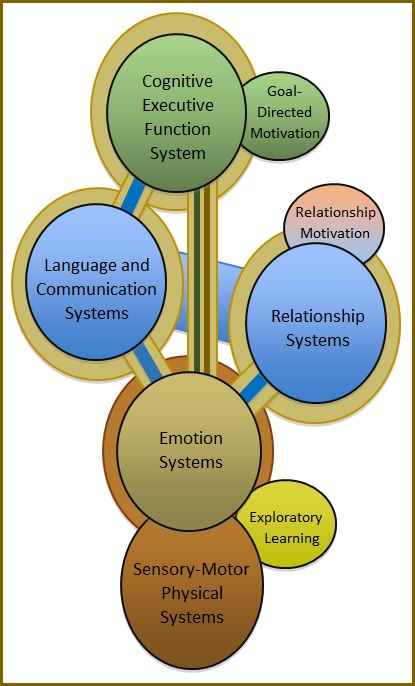 and each emotion has a different function on the brain.
3. Language and Communication Systems: Language and communication are key brain systems for planning and organizing behavior in a socially cooperative and well-regulated way. Language is linked into thinking systems and communication is linked into emotional systems.
4. Relationship Systems: There are two crucially important relationship systems, one for attachment bonding (love) and one for “psychological connection” – we feel what others feel as if we were having the feeling ourselves. The functioning of the “psychological connection” system is key to creating an integrated, well-functioning, socially cooperative brain during childhood.
5. Executive Function Systems: The executive function system incorporates thinking, anticipating the future, and planning. The executive function system also influences what emotions we feel and can inhibit the intensity of the emotions we feel.
6. Motivational Systems: There are three primary motivational systems
Exploratory Learning: Based in the sensory-motor and emotional networks, the common term for the exploratory learning motivations is “play.”
Relationship Motivations: The relationship motivations for affectional bonding and psychological connection are primary motivational directives that will take precedence over exploratory and goal-directed motivations.
Goal-Directed Motivation: Based in the executive function system, goal-directed motivation contains three components: goal-effort-accomplishment. The common term for goal-directed motivation is “work.”
When the various brain systems are functioning in a smooth and well integrated way, the child’s behavior is organized and well-regulated. The child is calm and relaxed, the child is appropriately communicative and socially cooperative. Organized and well-integrated brain systems produce organized and well-regulated behavior.
When the various brain systems become overwhelmed and begin to function in a disorganized and non-integrated fashion, then the child’s behavior becomes equally disorganized. The child becomes socially uncooperative, overly emotional, too inflexible, has emotional tantrums, is defiant, demanding, and argumentative, etc.
An organized well-integrated brain produces organized and well-integrated behavior. A disorganized and non-integrated brain produces disorganized and non-integrated behavior.
The developmentally supportive approach to parenting described in Family Designs uses the latest scientific research on child development and the neuro-development of the brain during childhood to understand and resolve the cause of the child’s disorganized emotions and behavior, thereby resolving the behavioral symptoms and restoring the child’s healthy emotional and psychological development.
The goal of a developmentally supportive approach to parenting is not merely to achieve an obedient child, but to achieve a cooperative child, child who is emotionally, socially, and psychologically healthy, and a child who matures into a responsible and successful adult, spouse, and parent.
The essays on this blog describe the various facets of a developmentally supportive approach to parenting.
Craig Childress, Psy.D.
Clinical Psychologist, PSY 18857
 Developmental Parenting: An Integrated Approach to Parenting